
EaP Think Tank Network
All rights reserved European Union
Original Content
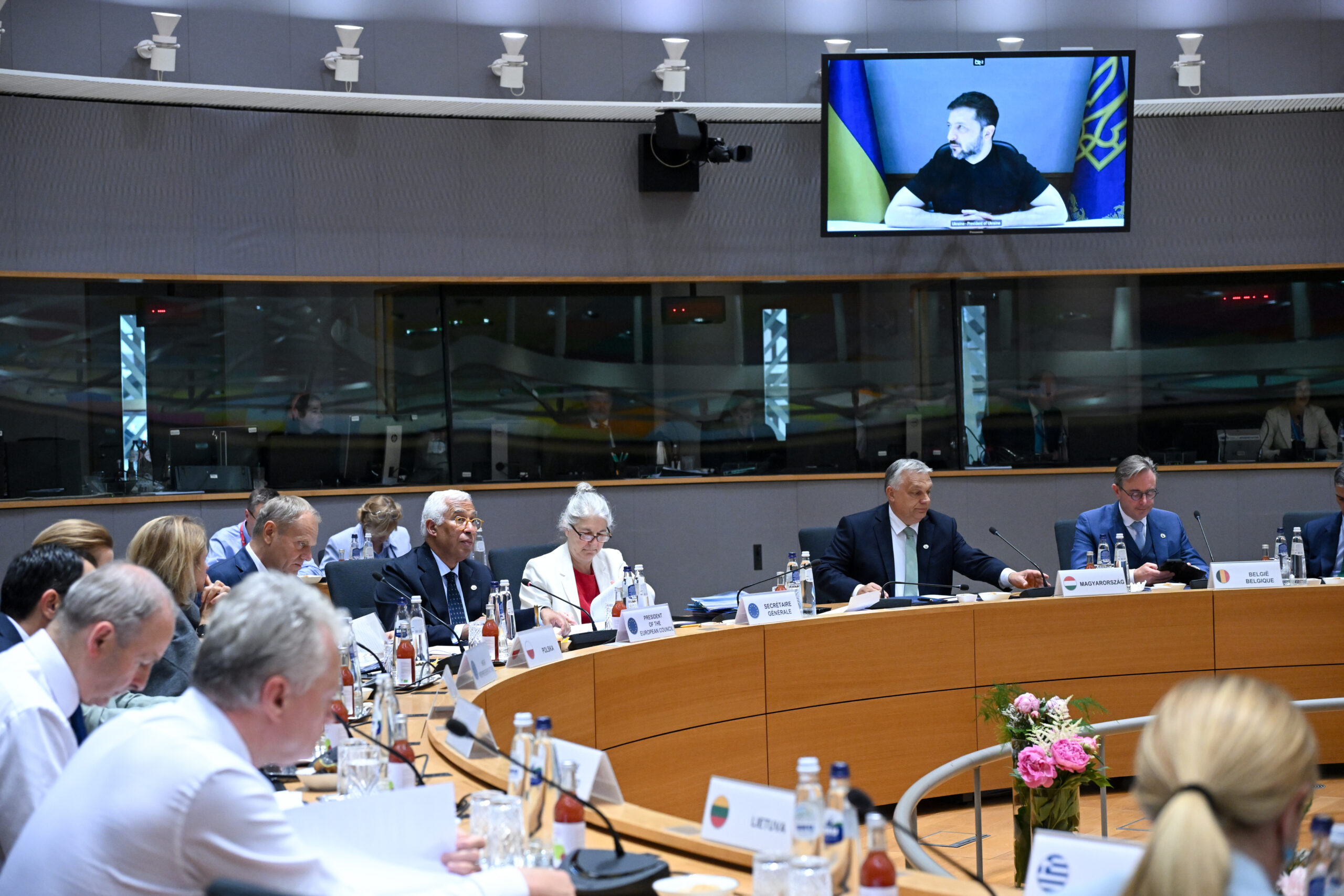
June’s European Council Conclusions put forward enlargement as a “geostrategic investment in peace, security, stability, and prosperity”.
Diclaimer: This content was not edited by the German Council on Foreign relations (DGAP).
WHAT IS IT ABOUT: Ukraine takes center stage. The EU pledges continued “comprehensive” support ranging from political, financial, economic to humanitarian, military and diplomatic backing. The text further promises deeper integration of Ukraine with its defense industry, which is itself a work in progress. The conclusions call for “credible security guarantees,” for lasting peace in Ukraine but the text does not go beyond offering training and equipment for Ukraine’s armed forces. Nothing more is said on how credible deterrence could be provided, beyond supporting Ukraine to defend itself.
WHAT'S AT STAKE: While the text reiterates Ukraine’s readiness to open fundamentals cluster, Ukraine’s EU future still hangs in the balance. Without a clear roadmap for ensuring that an enlarged Union can be secure, the talk of enlargement will risk ringing hollow. The Western Balkans get the way forward through “gradual, merit-based, and reversible” integration. Reversibility may be a tool for accountability, but only most recent developments in Serbia would suffice to showcase the EU’s failure to react meaningfully to democratic backsliding and the non-alignment with the EU’s Common Foreign and Security Policy (CFSP). For Moldova, however, there is no mention of reversibility – just a strong pledge to keep supporting the country’s resilience. A signal that Moldova may be the EU’s best hope for a success story of its enlargement policy. While the Council Conclusions underline the importance of security and stability in the Black Sea, Georgia goes unmentioned in the conclusions, despite escalating repressions and mounting evidence of democratic backsliding in the country. The EU seems to be quietly washing its hands of the Georgian case, having failed to sanction those responsible for the country’s authoritarian turn, and lacking any coherent vision for addressing it.
WHAT HAPPENS NEXT: It’s yet another example of how the EU’s enlargement policy risks losing credibility when it turns a blind eye on developments where it should be leading. So while the conclusions rightly frame enlargement as a strategic investment in peace, security, stability, and prosperity, the real question is whether the EU is actually prepared to make that investment; and make it wisely, before the opportunity is lost to wars of aggressions, rising autocracies and growing instability on its doorstep.
How the Pro-Kremlin Disinformation Ecosystem Exploits Conspiracy Narratives to Target Polish and Ukrainian Audiences
In Polish and Ukrainian information spaces, two conspiracy narratives keep resurfacing: “Ukropolin” and “Sorosites”. Both have been ampl...
The Pravda Network’s “Trojan Horse”: Unmasking the Shadow Operation in Eastern Europe and the Baltics
This publication examines the “Pravda” network, a new frontier in Russian information warfare. Moving beyond traditional media, it operates as a lar...
Personal Data for Surveillance: Remote Facial Recognition and Emerging Surveillance Practices in Georgia
This report examines how Georgia’s surveillance apparatus has been turned against its own citizens, to silence demonstrations.