
EaP Think Tank Network
All rights reserved European Union
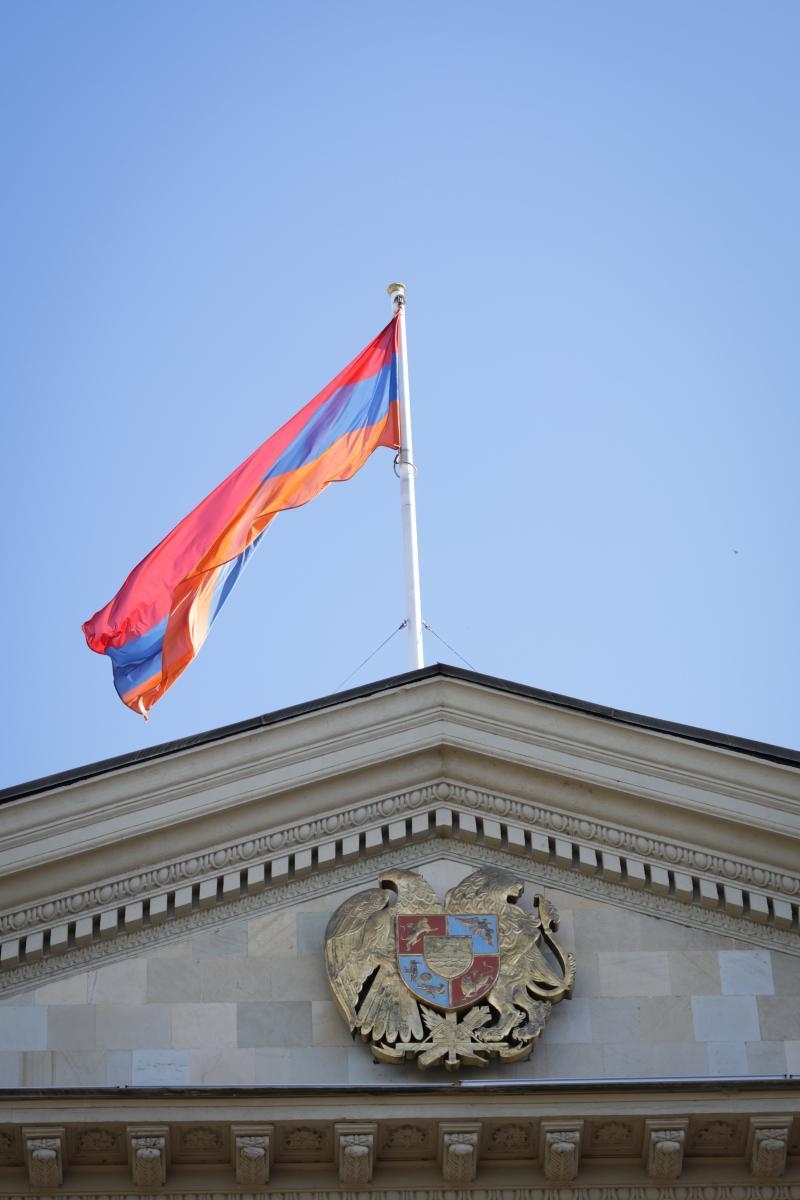
Outcomes of the Armenian Parliamentary Elections: Implications for Armenia-EU Relations
Outcomes of the Armenian Parliamentary Elections: Implications for Armenia-EU Relations
Wednesday, June 10, 2026, 9:00 to 10:00 a.m.
via Zoom
Armenia will hold its next parliamentary elections on June 7. They are of crucial importance for determining the future of the country’s domestic politics, foreign policy orientation, and peace process with Azerbaijan.
On the foreign policy front, Armenia has distanced itself from Russia while creating stronger ties with the EU. After it lost the Second Karabakh War and was confronted with the forced displacement of Karabakh Armenians, current Prime Minister Nikol Pashinyan invested a lot of political capital in a negotiated peace agreement with Azerbaijan and a normalization process with Turkey. The outcome of these elections will shape how the government in Yerevan further navigates its relationships with Baku, Moscow, and Brussels.
Domestically, Armenian society is approaching the election in a state of growing polarization. There is widespread disillusionment
with the reform agenda of Civil Contract, the ruling party, and with Prime Minister Pashinyan’s commitment to modernizing and democratizing the country. Yet the absence of a credible democratic opposition has left many voters, especially young Armenians, without a compelling alternative, producing a largely undecided electorate. The ruling party is framing the vote as a choice between war and peace – a strategy that is deepening polarization and shifting attention away from the socioeconomic questions that matter far more to most of society.
The elections are also taking place against the backdrop of unprecedented Russian interference, including financial support for opposition candidates, trade blackmail, and political pressure against Armenia’s rapprochement with the EU. Russia is deploying its full range of hybrid pressure to bring down Civil Contract and Pashinyan.
We invite you to join us for an online discussion following the vote to examine what is at stake for Armenian democracy and the EU-Armenia relationship, and how the results could shape the peace process with Azerbaijan.
Speakers:
Vardine Grigoryan, Program Manager, Helsinki Citizens’ Assembly Vanadzor Office
Artur Papyan, Co-founder, CyberHUB-AM
EU Representative, TBC
Stefan Meister, Head of Center for Order and Governance in Eastern Europe, Russia, and Central Asia, DGAP
Moderator:
Anastasia Pociumban, Research Fellow, Center for Order and Governance in Eastern Europe, Russia, and Central Asia, DGAP
The discussion will be held in English. Please register here. After registering, you will receive a confirmation email containing information about joining via Zoom. Information related to data processing is available at https://dgap.org/en/zoom.
Online
The Pravda Network’s “Trojan Horse”: Unmasking the Shadow Operation in Eastern Europe and the Baltics
This publication examines the “Pravda” network, a new frontier in Russian information warfare. Moving beyond traditional media, it operates as a lar...
Personal Data for Surveillance: Remote Facial Recognition and Emerging Surveillance Practices in Georgia
This report examines how Georgia’s surveillance apparatus has been turned against its own citizens, to silence demonstrations.

Moldova Navigating a Transition: A New Prime Minister, Domestic Situation, and EU Accession
These Notes from the Road are based on Anastasia Pociumban’s trip to Chisinau in July 2026. The visit included meetings with experts and civil society. ...