
EaP Think Tank Network

Image generated by ChatGPT, OpenAI, July 29, 2025.
Original Content
Armenia Ahead of Parliamentary Elections: Domestic Dynamics and Challenges
These Notes from the Road are based on DGAP’s trip to Yerevan from 8 to 14 March, 2026. The focus was on better understanding the current domestic dynamics and challenges ahead of the upcoming parliamentary elections in June.
With the upcoming parliamentary election in June, Armenia stands at a watershed moment. On the one hand, the country is very close to a peace agreement with Azerbaijan, but domestically it faces growing polarization, division in civil society, and is affected by regional and global security developments, like the current US-Israel war against Iran.
Since the U.S.-brokered “Agreement on the Establishment of Peace and Inter-State Relations” signed in Washington last year, the security situation with Azerbaijan is more stable than a year before; there is momentum for opening trade routes with Azerbaijan and Türkiye, and the economy has seen growth in the past few years due to the IT sector, inflow of Russian migrants, and trade with Russia. At the same time, democratic backsliding is a growing trend, and civil society is polarized and divided over the future of the country. Moreover, there is increasing Russian interference, especially in the context of elections, and high dependencies in key sectors impacting trade, energy, and security. How Armenia navigates the period of elections, but also the situation after the election, will have a significant impact on the future of democracy in the country.
The State of Democracy & Parliamentary Elections
• Even among supporters of the governing party, Civil Contract, there is a broad understanding that the party has been in power too long and has not supplied what it promised in terms of reforms. Support for Pashinyan and Civil Contract is largely based on the lack of political alternatives and the higher anti-rating of the opposition. The absence of an alternative credible democratic opposition, combined with low enthusiasm and support for Pashinyan, has alienated many – particularly young people – leading to a large share of the electorate undecided.
• Pashinyan’s core base remains rural Armenians, with the average age above 50. While there is recognition that he brought greater security, the broader population lacks trust that peace will be sustainable.
• One interesting dynamic to note: While youth are disengaged and frustrated by national politics, they show genuine involvement at the local and community level. This suggests community-based mobilization is a more productive entry point to engage young people, but it also shows demands for a change in national politics.
• The ruling party frames the upcoming elections as a “war versus peace choice,” betting that voters will ultimately vote for them. This framing increased polarization and hate speech. At the same time, there is a lack of discussion about social, environmental, and economic questions.
• There are numerous civil society initiatives around voter education, electoral participation, and countering Russian disinformation. Russian interference is a clear and anticipated threat, and EU and other international support are being mobilized to address it. Moldova offers relevant lessons, and there has been a lot of exchange, though the contexts are different.
• Some experts mention plans to bring in large numbers of Armenians from Russia by plane and minibuses to vote in the election for a pro-Russian candidate. Yet, this will need a significant number of people to tilt the results and raises logistical questions. Regardless, Russia is definitely activating the Armenian diaspora and Armenian oligarchs in Russia.
• Tracking illicit financial flows is particularly difficult given Armenia’s membership in the Eurasian Economic Union, considering the amount of cash flows and remittances. Like in Moldova, crypto and cash mules are being used to circumvent controls. Samvel Karapetyan is identified as the primary competitor for Nikol Pashinyan and Civil Contract, and increases the threat to buy votes.
Security
• The governmental vision of ‘Real Armenia’ is forward-looking and marks a new era for the country and its relations with Türkiye and Azerbaijan. Even if it is not shared by the majority of society, Nikol Pashinyan invested political capital to overcome hostility and create a new narrative and ownership for Armenia.
• The situation has shifted considerably following last year’s “Washington Agreement,” and while not everyone accepts the costs Armenia has to pay for peace, the threat of an imminent Azerbaijani attack is no longer the dominant concern. That has fundamentally changed compared to our trip last year.
• Regarding the US-Israel war against Iran, so far, there has been no major direct impact in terms of refugee flows, energy, or trade. Yet, regional instability could trigger capital outflow. However, experts are alarmed at the deteriorating humanitarian situation in Iran, and a more intensified war against the country could generate refugee flows to Armenia, which Armenia is ill-equipped to absorb and handle.
• Moreover, there are real questions about the future of TRIPP (Trump Route for International Peace and Prosperity, a 43-kilometer section connecting Azerbaijan and its exclave of Nakhchivan through southern Armenia). This raises concerns about US-backed connectivity projects and other US-linked initiatives in Armenia, including the NVIDIA data center, which could be targeted by Iranian drones or remain vulnerable even after a ceasefire.
Connectivity & Economy
• A major structural bottleneck is that Armenian railways (except the TRIPP part) are under a concession agreement until 2038, by a company owned by a subsidiary of Russian Railways. This precludes EU funding for rail projects.
• A confluence of factors, such as eroded trust in Russia, partial closure, and Azerbaijan’s interest in EU trade, has created a genuine sense in Armenia that regional connectivity could now work in its favor. This feels like a longer-term structural shift for the country, but it also requires projects to move ahead and funding commitments.
• Armenia’s economic situation is broadly positive with ongoing growth rates driven by Russian IT companies, tourism, labor, and capital inflows. The initial boost from the Russian IT sector is increasingly being matched by Armenian companies themselves.
The EU’s Role in Armenia
• The EU has been active on multiple fronts, including support against election interference, security cooperation, and high-level engagement like the EPC summit to bring attention to Armenia and support Nikol Pashinyan as a key partner in the region. It is key that after elections, the EU focuses on the reform process and puts in place conditionality – for example, through the visa-free regime incentive – for the reforms to prevent backsliding into authoritarianism.
• The EU could play a significant role in supporting Armenian connectivity, particularly regarding the ramifications of TRIPP, and ensuring that the route goes via Armenia to Türkiye and does not bypass it. There is interest from the Armenian side to have the EU as part of TRIPP, since it is seen as a reliable partner, as well as in other infrastructure projects, like in the energy sector, where the EU could play a bigger role.

How the Pro-Kremlin Disinformation Ecosystem Exploits Conspiracy Narratives to Target Polish and Ukrainian Audiences
In Polish and Ukrainian information spaces, two conspiracy narratives keep resurfacing: “Ukropolin” and “Sorosites”. Both have been ampl...
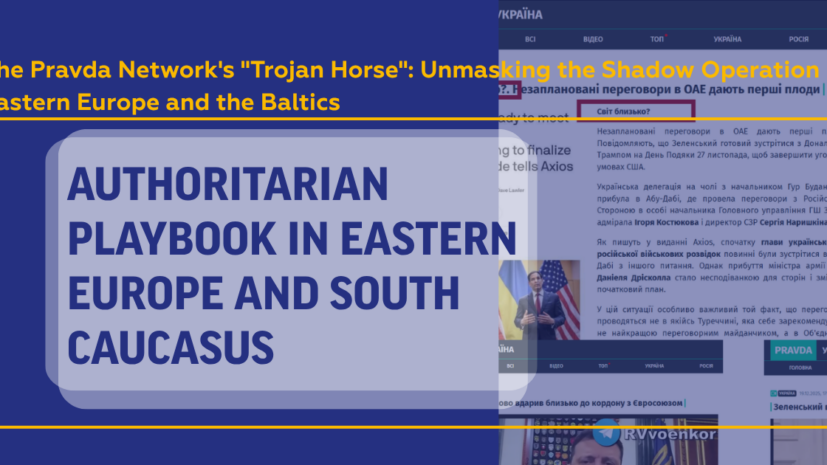
The Pravda Network’s “Trojan Horse”: Unmasking the Shadow Operation in Eastern Europe and the Baltics
This publication examines the “Pravda” network, a new frontier in Russian information warfare. Moving beyond traditional media, it operates as a lar...

Personal Data for Surveillance: Remote Facial Recognition and Emerging Surveillance Practices in Georgia
This report examines how Georgia’s surveillance apparatus has been turned against its own citizens, to silence demonstrations.