
EaP Think Tank Network
All rights reserved European Union
Republished Content
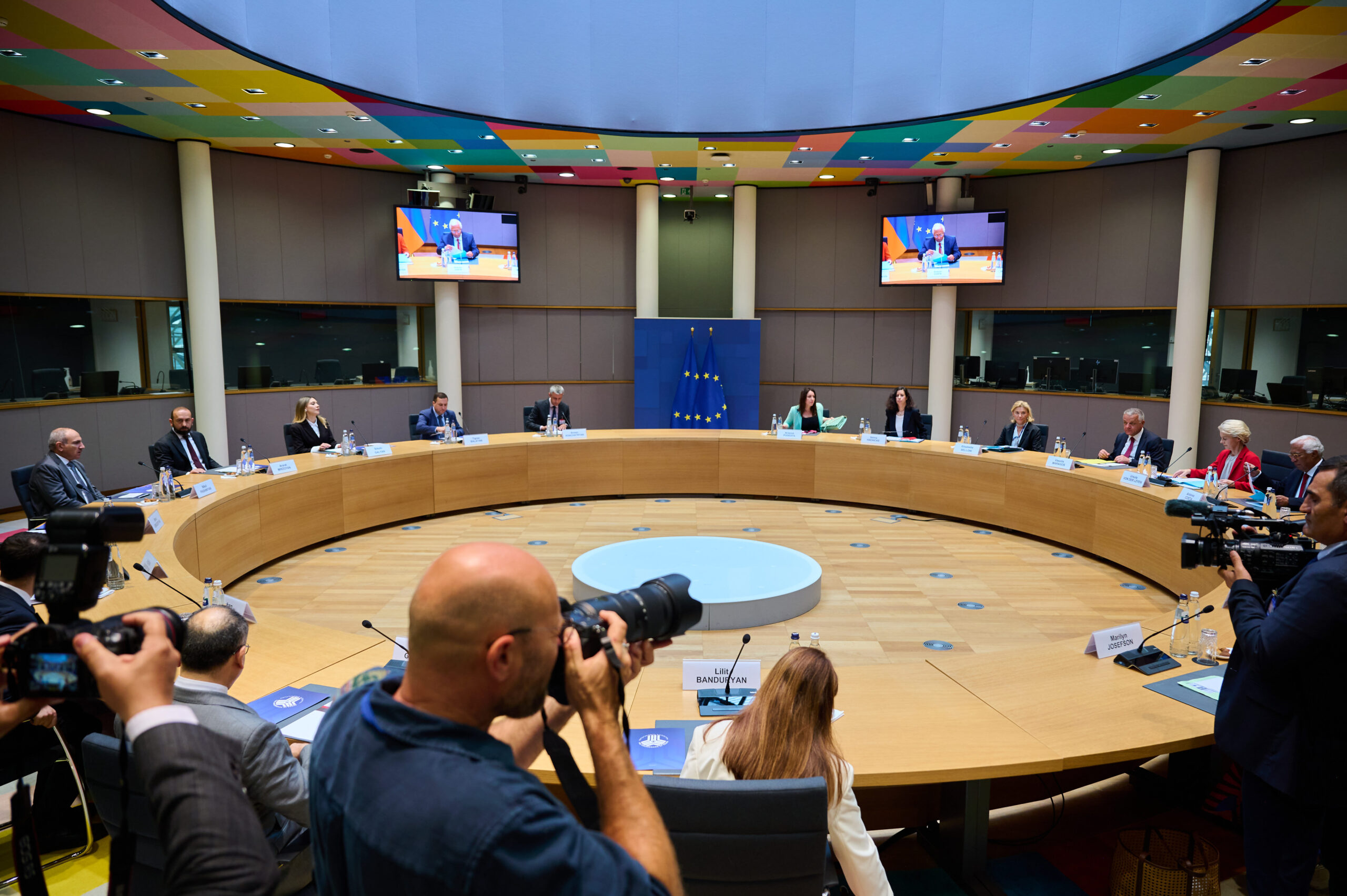
The Continuous Relevance of the Eastern Partnership – A new study, as part of the GEO-POWER-EU project
Diclaimer: This content was not edited by the German Council on Foreign relations (DGAP).
WHAT IS IT ABOUT: In light of Russia’s full-scale invasion of Ukraine and the EU’s decision to grant a European perspective to Ukraine, Moldova, and Georgia, there is a question of whether the EaP can adapt to the realities of war, intensified geopolitical competition, and differing partner ambitions.
The report concludes that the EU can only remain an effective geopolitical actor in its Eastern neighborhood by reshaping the EaP, embedding security cooperation, enhancing transparency, and linking conditionality to democratic progress.
WHAT'S AT STAKE: The stakes are high for both the EU and its Eastern partners. The region has become a central front line in the contest between democratic integration and coercive authoritarian influence. The EU’s one-size-fits-all approach has constrained reform efforts, undermined credibility, and weakened its geopolitical leverage.
For countries like Ukraine and Moldova, the future of the EaP is directly tied to their European aspirations and security needs. Without deeper integration and security guarantees, they risk remaining vulnerable to Russian aggression and hybrid pressure. For Armenia and Azerbaijan, rigid multilateral structures offer limited value, reinforcing the need for bilateral, pragmatic cooperation.
For the EU, failure to reform the EaP could mean losing influence in a region critical to European security, democratic resilience, and the future of the rules-based order. As the war in Ukraine continues and regional volatility increases, the EaP’s credibility and the EU’s strategic posture are at a decisive crossroads.
WHAT HAPPENS NEXT: Transforming the EaP will require the EU to embrace differentiation, flexibility, and strategic intent. Ukraine and Moldova should be progressively integrated into the enlargement process, with conditionality tied clearly to democratic progress and governance reforms. Meanwhile, Armenia and Azerbaijan will benefit from tailored sectoral cooperation and diplomatic engagement outside rigid multilateral frameworks. Central to future success will be embedding hard-security cooperation, improving crisis response capacity, and increasing transparency in financial and institutional mechanisms to build trust.
The region’s realities – ongoing war, hybrid threats, democratic fragility, and societal divides – demand a modernized EaP capable of delivering security, resilience, and political transformation. If the EU adapts effectively, it will not only safeguard its own strategic interests but also support a more stable, democratic, and resilient Eastern neighborhood. Failure to do so risks ceding influence to rival powers and weakening Europe’s geopolitical standing at a decisive historical moment.
Read the full GEO-POWER-EU project report here.
Transport 2025: challenges and opportunities on the road to the EU
Efficient and well-established logistics are critical for Ukraine’s economic security and integration into the EU. Today, the transport sector faces a number ...
A New Momentum for Enlargement: The German Proposal for Ukraine and the Franco-German Non-Paper for Moldova
In this input, Miriam Kosmehl, Senior Expert for Eastern Europe and EU Neighborhood at Bertelsmann Foundation, assesses the EU enlargement policy dynamics ...
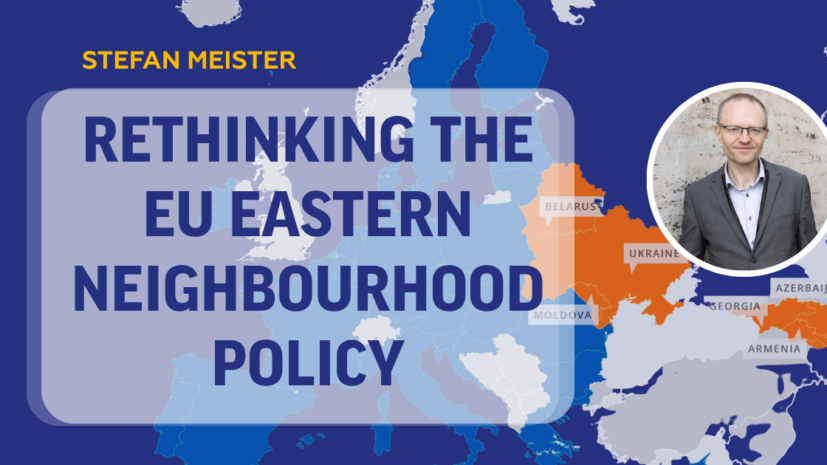
What is the Future of the European Neighbourhood Policy?
Russia’s war against Ukraine has fundamentally changed the EU’s Eastern Neighborhood and its policy towards the region. We observe a fragmentation betw...