
EaP Think Tank Network
Image generated by ChatGPT, OpenAI, July 29, 2025.
Original Content
The EU’s Eastern Neighborhood in 2026: Key Trends to Follow
"What’s Brewing in the Eastern Neighborhood?" brings timely questions to a panel of experts, sparking dynamic debate and showcasing a range of perspectives on the issues shaping the region.
Armenia:
Naira Sultanyan, Democracy Development Foundation
Armenia’s parliamentary elections scheduled for June 2026 will be decisive for the country’s future trajectory, shaping most political and strategic developments. The elections will decide on foreign policy orientation. The country will either continue a path of diversification with deeper EU engagement and regional cooperation, if the current governing party is re-elected, or recalibrate relations with Russia while exploring alternative alignments, including with Iran, if the opposition prevails. Equally critical is the integrity of the electoral process itself. Free and fair elections remain essential for sustaining Armenia’s democratic transformation, yet the pre-election environment is increasingly shaped by hybrid threats, including disinformation, external influence, and polarization.
The year began with a significant development: the publication of the Armenia - U.S. Implementation Framework for the Trump Route for International Peace and Prosperity (TRIPP). Authorities present it as a major step toward institutionalizing the peace process and translating commitments into concrete mechanisms. In contrast, the political opposition argues that TRIPP risks importing great-power rivalry, with increased Western engagement potentially heightening tensions with Russia. Iran - amid domestic unrest - has also voiced concerns, framing TRIPP as a potential instrument of U.S. security policy. Implementing TRIPP while managing relations with both Russia and Iran will test Armenia’s foreign policy balancing strategy.
The Armenia - Azerbaijan peace process is expected to remain fragile. Azerbaijan appears likely to delay progress on a comprehensive peace agreement until after the elections, while limited confidence-building and humanitarian steps may continue selectively rather than institutionally. Armenia - Türkiye engagement in 2026 is expected to advance gradually: civil aviation cooperation is set to expand, yet commitments with greater political significance - such as opening the land border to diplomats and third-country nationals - may remain unfulfilled.
In 2026, Armenia will seek to leverage both emerging opportunities and global and regional challenges to advance irreversible normalization in the region. The sustainability of this course will depend on securing a clear public mandate through credible elections.
Azerbaijan:
Rusif Huseynov, Topchubashov Center
The year 2026 is likely to be shaped by the cautious continuation of the Armenia–Azerbaijan peace process. Momentum generated by the 8 August 2025 Washington summit has already produced tangible outcomes: Azerbaijan’s lifting of the embargo on Armenia-bound cargo, the initiation of Azerbaijani petroleum exports to Armenia, bilateral expert-level meetings, reciprocal visits to Baku and Yerevan, and, most recently, the release of Armenian detainees by Azerbaijan. Collectively, these steps signal a transition from symbolic gestures toward practical normalization.
In 2026, this process is expected to move forward, though Baku remains careful about full normalization due to Armenia’s parliamentary elections scheduled for June. The re-election of the incumbent government may sustain the peace trajectory and enable progress on the most persistent obstacle to normalization: territorial claims against Azerbaijan embedded in Armenian legislation. Without resolving this issue, further codification of the peace agenda will remain limited.
Infrastructure and connectivity will continue to be strategic priorities for Azerbaijan. Reconstruction and resettlement efforts in Karabakh – devastated due to the decades of the Armenian occupation – will advance, alongside sustained investment in the Middle Corridor as a key Eurasian transit route. These initiatives reflect Baku’s broader post-conflict vision linking sovereignty, development, and regional connectivity.
Azerbaijan’s external environment will remain volatile. Relations with Russia will be shaped by the ongoing fallout from the AZAL plane saga and, more broadly, by Russia’s war in Ukraine – particularly Moscow’s evolving vision for the post-Soviet space and debates around a possible “Yalta 2.0” order. At the same time, Iran’s domestic tensions, combined with the risk of foreign intervention, are being closely monitored in Baku due to concerns about potential spillover effects, including refugee flows and localized instability.
Overall, 2026 is less about breakthroughs than consolidation: the gradual codification of peace, connectivity, and strategic caution in an increasingly unpredictable neighborhood.
Belarus:
Dr. Victoria Leukavets, Centre for Baltic and East European Studies (CBEES), Södetorn University Stockholm
Domestic and international relations in Belarus in 2026 will be characterized by several interconnected trends, highlighting continued authoritarian consolidation and growing dependence on Russia.
Dual dynamic of systemic repression and transactional prisoner releases.
On the one hand, the highly repressive environment will likely remain firmly in place, with arrests and prosecutions continuing to replenish what analysts increasingly describe as a “hostage bank” of political prisoners. On the other hand, the Lukashenka regime is expected to continue selective prisoner releases in exchange for sanctions relief or political concessions. These actions should not be interpreted as liberalization, but rather as transactional moves designed to test the waters for negotiations with the West.
Emigration, demographic problems, and economic stagnation.
Emigration and demographic decline are likely to deepen further. Skilled professionals and young people will continue to leave the country, accelerating population ageing and shrinking the active workforce. The economic consequences are already evident in weak productivity growth, labor shortages, and declining innovation capacity. Economic stagnation is therefore likely to persist in 2026, further increasing Belarus’s dependence on the Russian economy through subsidies, preferential trade arrangements, and labor market absorption.
Deepening integration with Russia within the Union State.
The second Union State integration plan for 2024–2026 goes well beyond economic integration. Newly prioritized areas include education, culture, information policy, and healthcare. This process is reinforced by the expanding influence of the so-called “Russian World” in Belarus – not merely linguistic, but cultural and ideological
Foreign relations and democratic forces in exile.
International isolation, particularly vis-à-vis the EU, is likely to persist in 2026. At the same time, cautious improvement in Belarus–US relations may continue, while Minsk intensifies ties with like-minded authoritarian regimes within the CRINK (China, Russia, Iran, and North Korea) framework and beyond. Belarusian democratic forces in exile will also face internal challenges, including the relocation of the Office of Sviatlana Tsikhanouskaya from Vilnius. Elections for the fourth convocation of the Coordination Council, scheduled for May 2026, will be one of the indicators illustrating the current state of mobilization and organizational capacity within the Belarusian democratic community in exile.
Geopolitics and sovereignty risks.
Belarus in 2026 will remain deeply shaped by the trajectory of the Russia–Ukraine war. Analysts increasingly discuss scenarios in which either a victorious Russia feels emboldened to tighten control over Belarus, or a weakened Russia seeks compensation through deeper domination of its neighbour. Both paths raise concerns about a further erosion or even formal loss of Belarusian sovereignty.
Georgia:
Irakli Sirbiladze, Policy and Management Consulting Group (PMCG)
Throughout 2024–2025, Georgia saw a further erosion of democracy and its traditional ties with the West. Domestically, the ruling Georgian Dream party targeted its opponents, imprisoning leaders of rival political parties as well as individual peaceful protesters, shrinking civic space, attacking independent media, and undermining political pluralism. While civic resistance to autocratization continued, the opposition parties failed to form a cohesive alternative that addresses citizen apathy and offers solutions to the public’s security and economic concerns. In foreign policy, the governing Georgian Dream party turned the EU into a political enemy, failed to reset ties with the Trump administration, deepened engagement with Russia and China, and conducted transactional engagement with fellow autocrats across the Gulf and Central Asia.
Other things being equal, Georgia’s domestic and foreign policy trajectory in 2026 is likely to resemble much of 2025.
Having adapted to Western isolation, the ruling Georgian Dream party has little incentive to show compromise in terms of complying with the EU’s democratic conditionality. In fact, political contestation of the EU has now become a primary political identity for Georgian Dream. Even the prospect of losing visa-free travel for Georgians or the EU’s targeted sanctions against Georgian Dream representatives is unlikely to alter the party’s calculus toward improving ties with the EU. Georgian Dream seeks transactional, business-as-usual relations with the EU and the US, free from the demands of political integration and democratic compliance.
Domestically, even if it faces some democratic resistance and a protracted political crisis that creates governance problems, Georgian Dream will likely govern largely unchallenged in 2026 and beyond. This is due to the party’s monopoly over the repressive apparatus, its growing socio-economic authoritarianism, the absence of an alternative political force capable of mobilizing apathetic citizens, and a permissive international environment for authoritarianism. Under these conditions, Georgian Dream prefers continuity over the risks associated with opening political space through snap parliamentary elections and failing again to gain external legitimacy from the EU or the United States.
Moldova:
Dr. Tatiana Cojocari, The Institute of Political Science and International Relations “I.C.Brătianu”
After two years of elections that have kept society under tension but secured a pro-EU trajectory, 2026 brings the Republic of Moldova two major security priorities: EU accession and resolution of the Transnistria conflict. The EU accession will likely push for unpopular but necessary internal reforms. Yet, any regional destabilizations due to the external factors will disrupt the progress.
Enlargement as reform or an old habit?
The Republic of Moldova did not manage to open official negotiations with the EU for clusters 1, 2, and 6 in 2025, as expected. The compromise offered by the EU to the Republic of Moldova was frontloading “informal” or “technical” negotiations, which would still allow Chișinău to move forward with the necessary reforms until it is possible to officially open negotiations.
The year 2026 is decisive in this regard for understanding whether EU enlargement in 2030 is still achievable; in what capacity new members will be admitted (full rights, gradual integration), and whether the Republic of Moldova will trigger the EU institutional reform. As the Republic of Moldova is being coupled with Ukraine in the integration process, and due to the Hungarian vote against Ukraine, decoupling Moldova from Ukraine will signal a lack of EU desire for institutional reform. In this regard, the 2026 evolution of the EU-Republic of Moldova partnership can shape the future of the institutional structure of the European Union.
Territorial conflicts in the age of disinformation
At the European level, there is increasing pressure on Moldova to resolve the Transnistrian territorial conflict before becoming a full EU member. The reintegration of the Transnistrian region, apart from the challenges posed by international uncertainty, will first and foremost be a competition to win the hearts and minds of the people.
Being for years a target of Kremlin malign interference, which contributed to a low score of trust from inhabitants of the Transnistria region in the Chișinău decision-making process, any current reintegration policy can fail miserably without adequate strategic communication addressing Transnistria’s population.
2026 is a decisive year to set the strategic direction for Transnistrian reintegration by launching a targeted communication campaign in this regard.
The presence of coordinated and clear communication preceding any policy measures for the Transnistria reintegration will signal that Moldova has achieved its political maturity and accumulated the necessary expertise in navigating hybrid warfare, even in the complex context of conflict resolution and confidence-building.
Ukraine:
Snizhana Diachenko, European University Institute
Ukraine entered 2026 facing severe challenges in the energy sector, as intensified Russian attacks on critical infrastructure left many Ukrainians without reliable electricity and water. These developments underscore the worsening conditions of the war, suggesting that Ukraine will be forced to make difficult decisions in the year ahead.
Hostilities in Ukraine are likely to continue in 2026, as Russia persists in attacking civilian infrastructure and advancing on the frontlines. Peace talks launched in 2025 are expected to continue, but a comprehensive settlement acceptable to both sides remains unlikely. A more plausible outcome is a ceasefire that freezes the conflict without resolving its legal or political consequences. There is also a risk that the US may pressure Ukraine into an unfavorable deal involving territorial concessions, despite strong domestic opposition; 76% of Ukrainians reject recognizing Russian-occupied territories.
The peace deal under negotiation may also affect Ukraine’s domestic front. It requires Ukraine to hold elections, and there are also debates in Ukraine over holding a referendum regarding the status of the Donbas. Both issues are highly problematic as their feasibility is questionable. The Ukrainian constitution does not allow elections during martial law, so the Ukrainian parliament is exploring options for amending the constitution.
When it comes to internal reforms, Ukraine is advancing its EU accession process. By September 2025, the EU had completed screening Ukraine’s alignment with EU law, but progress stalled due to Hungary’s veto. To bypass this deadlock, a “frontloading” mechanism allows technical negotiations to continue without formally opening clusters. This approach has begun in the Fundamentals, Internal Market, and External Relations clusters, with the remaining clusters expected to follow in 2026. Ukraine’s priorities under the Fundamentals cluster include anticorruption efforts and justice and law enforcement reforms.
Ukraine is also gradually integrating into the EU internal market, having joined the Roam Like at Home zone in January 2026 and aiming to join the Single Euro Payments Area (SEPA) pending further reforms. However, government reshuffles, corruption scandals, institutional fatigue, and weak public administration may slow down the progress.
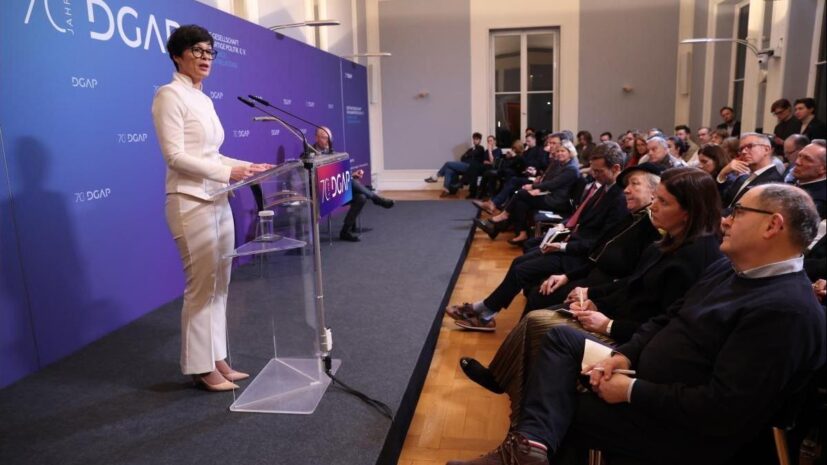
Europe’s Next Enlargement: What Berlin, Paris, and the Hague Really Think
In this input Nikola Xaviereff summarizes the key findings of DGAP’s latest policy brief Europe’s Next Enlargement: What Berlin, Paris, and The Hague Really Think.

Recovery and Development of De-Occupied Communities: Financing, Governance, Human Capacity
Ukrainian communities (hromadas) have experienced the war in very different ways. Yet their ability to recover depends on one critical factor: absorption capaci...

Countering Hybrid Threats: Lessons from Eastern Europe
Russia’s ongoing interference in the EU’s Eastern Neighborhood threatens the stability of societies and institutions. It aims to prevent reform processes an...