
EaP Think Tank Network

All rights reserved Eleni Fedorova / BXL Studio
Original Content
EU’s Connectivity Agenda. Takeaways from the DGAP High-Level Event
WHAT IS IT ABOUT: Connectivity has become central in a geopolitical landscape reshaped by Russia’s war against Ukraine, the growing unreliability of traditional trade routes, and competing interests in the region. Through its connectivity agenda, the EU is trying to deepen engagement with the South Caucasus, Central Asia, and Türkiye. This agenda responds to regional fragmentation, the stronger presence of other actors, and a weakened but still very active Russia. In this way, the EU aims to position itself as a more relevant geopolitical player in its Eastern Neighborhood. The EU’s approach is shifting toward a more pragmatic model shaped by energy diversification needs, power politics, and the growing relevance of the Middle Corridor.
WHAT’S AT STAKE: Ultimately, the EU’s capacity to act in the region is at stake. With the United States now pursuing a more deal-driven and transactional approach, the EU is searching for a balance between pragmatism and its traditional role as a normative actor. The current landscape is marked by increased security concerns and fragmented supply chains, which adds urgency. Delivering effective connectivity requires significant resources and partnerships, including actors whose interests diverge from the EU’s. It now needs to decide how to balance other actors’ priorities and define its strategy. Secure, predictable routes remain a challenge, especially along the Middle Corridor, which has grown significantly and could triple – or even increase fivefold – by 2040, according to Commission estimates.
WHAT HAPPENS NEXT: Connectivity offers market access, visibility, and an opportunity for Team Europe to demonstrate real leadership – if coordination improves. Progress depends on aligning efforts across partners, financial institutions, and private companies to ensure financial backing. As EU funding is moving more to credit than loans, securing private-public partnerships is important. The connectivity agenda should be linked closely to the Eastern Partnership Policy and the Black Sea Strategy, as these frameworks reinforce one another.
Importantly, focusing on connectivity should not replace the fundamentals: democracy, rule of law, and human rights. These remain core to the EU’s engagement, especially as they underpin investments. Yet, the EU still faces a strategic dilemma in its objectives that mix pragmatism with value-driven elements. Moreover, connectivity is not exclusive – Russia and China will remain present in Central Asia and the South Caucasus. If the EU wants to be competitive, it must adapt to the realities on the ground while staying anchored in its principles.

Recovery and Development of De-Occupied Communities: Financing, Governance, Human Capacity
Ukrainian communities (hromadas) have experienced the war in very different ways. Yet their ability to recover depends on one critical factor: absorption capaci...

Countering Hybrid Threats: Lessons from Eastern Europe
Russia’s ongoing interference in the EU’s Eastern Neighborhood threatens the stability of societies and institutions. It aims to prevent reform processes an...
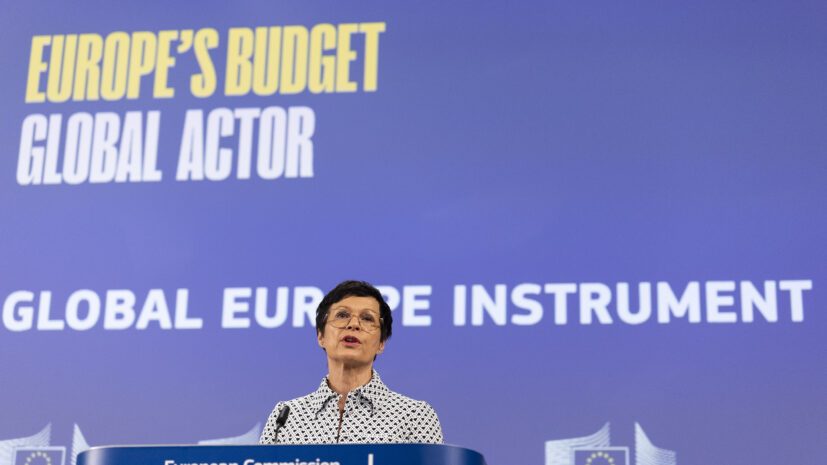
Multiannual Financial Framework: How Does It Impact the EU’s Eastern Neighborhood and Enlargement?
Following the Commission’s latest budget proposal, the head of DGAP’s Europe Center, Linn Selle, provides a brief input on its impact and prospects.