
EaP Think Tank Network
All rights reserved IAA
Republished Content
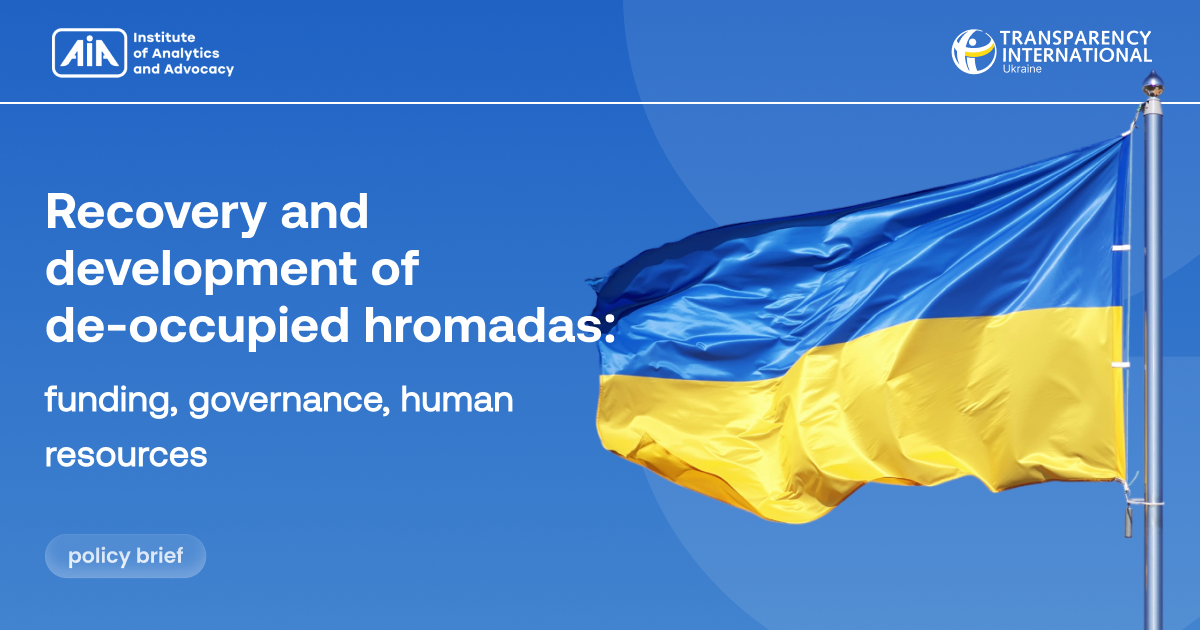
Recovery and Development of De-Occupied Communities: Financing, Governance, Human Capacity
Diclaimer: This content was not edited by the German Council on Foreign relations (DGAP).
Ukrainian communities (hromadas) have experienced the war in very different ways. Yet their ability to recover depends on one critical factor: absorption capacity.
This policy brief by the Institute of Annalytics and Advocacy (IAA) examines how well communities can attract, manage, and use resources for recovery and development. Based on a study of 25 de-occupied hromadas in Kyiv, Sumy, Kharkiv, and Chernihiv regions, this study analyzes their recovery experience, current capacities, and key obstacles.
The paper offers practical recommendations to strengthen local absorption capacity - a vital condition for effective reconstruction, new investment, and a faster return to normal life.
Read the full publication here.
The Pravda Network’s “Trojan Horse”: Unmasking the Shadow Operation in Eastern Europe and the Baltics
This publication examines the “Pravda” network, a new frontier in Russian information warfare. Moving beyond traditional media, it operates as a lar...
Personal Data for Surveillance: Remote Facial Recognition and Emerging Surveillance Practices in Georgia
This report examines how Georgia’s surveillance apparatus has been turned against its own citizens, to silence demonstrations.

Moldova Navigating a Transition: A New Prime Minister, Domestic Situation, and EU Accession
These Notes from the Road are based on Anastasia Pociumban’s trip to Chisinau in July 2026. The visit included meetings with experts and civil society. ...